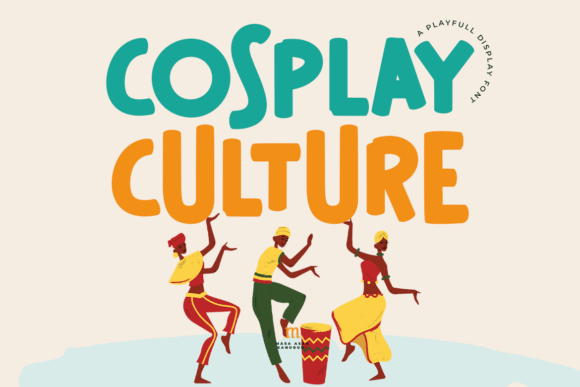
Cosplay Culture: A Playful Font for Creative Branding
I was staring at a blank brand board the other day, trying to figure out how to bring a small café’s identity to life. The client wanted something fun and approachable, with a touch of whimsy that would stand out in their neighborhood. That’s when I stumbled upon Cosplay Culture—a display font that immediately caught my eye.
At first glance, it felt like the kind of font you’d see on a comic book cover or a festival poster. It had that playful energy, but with enough structure to feel professional. I decided to test it out on a few logo drafts, and within minutes, I knew this was going to be a key element in the project.
A Font That Speaks to Creativity
Cosplay Culture is more than just a font—it’s a mood. Its rounded edges and slightly exaggerated letterforms give it a friendly, almost cartoonish vibe without veering into childish territory. It has a sense of motion, as if the letters are dancing across the page. This makes it perfect for brands that want to convey a sense of fun, imagination, and a bit of rebellion against the ordinary.
The font works especially well for short-form text, which is great for logos, headlines, and taglines. But what really stood out to me was how it handled longer copy. Even though it’s a display font, it still managed to maintain readability in body text when used sparingly. That flexibility made it a strong candidate for use across multiple brand assets.
Testing the Font in Real Design Scenarios
I started by placing Cosplay Culture on the café’s logo mockup. The result was instantly engaging. It felt like it belonged in a space that welcomed everyone, from kids to adults. Next, I tried it on a menu draft. I paired it with a clean sans-serif font for the pricing and descriptions, which helped balance the playful tone with clarity.
On packaging mockups, the font brought a sense of personality to the coffee bags and promotional stickers. It looked great on a shop sign too, where it could catch attention from passersby. For social media graphics, I used it in Instagram posts and Facebook ads, where its boldness helped make the content pop against bright backgrounds.
Even in printed materials like business cards and flyers, Cosplay Culture added a unique visual flair. It wasn’t too over the top, but it definitely made the brand feel memorable.
Design Considerations and Pairing Suggestions
One thing I learned early on was that Cosplay Culture needs to be balanced with a complementary typeface. When used alone, it can feel a bit too whimsical for certain contexts. So I paired it with a modern sans-serif like Helvetica Neue for body text and headings. This combination kept the design cohesive while ensuring legibility across different mediums.
For more formal elements, like product labels or website footers, I used a serif font to add a touch of elegance. The contrast between the playful Cosplay Culture and the more traditional serif created a nice dynamic that worked well for the brand’s overall aesthetic.
Another consideration was file formats and licensing. Since the client planned to use the font across both digital and print materials, I made sure the font came with full commercial rights. It also supported multiple languages, which was important since the café served an international clientele.
Practical Tips for Using Cosplay Culture
If you’re thinking about using Cosplay Culture in your next project, here are a few tips:
- Test it in context: Always try the font in real-world scenarios before committing. How does it look on a website header? On a business card? In a brochure?
- Limit its use: Because it’s a display font, use it for headlines and accents rather than long blocks of text.
- Pair wisely: Find a supporting font that complements its style without clashing. A minimalist sans-serif or a classic serif often works well.
- Check multilingual support: If your brand operates in multiple regions, ensure the font supports all necessary characters.
- Ensure consistency: Use it consistently across all brand materials to build recognition and reinforce your brand identity.
Overall, Cosplay Culture has become a go-to font for projects that need a creative edge. Whether it's for a boutique, a skincare brand, or a local restaurant, it adds that extra layer of personality that makes a brand stand out in a crowded market.
As I wrapped up the café project, I couldn’t help but think about how much the right font can influence a brand’s perception. Cosplay Culture wasn’t just a choice—it was a statement. And that’s exactly what every designer wants: a tool that speaks for itself, with a voice that resonates with the audience.